
The owner of the restaurant looks at the sales and then at the bottom line before closing the report.
Sound familiar?
If just those two numbers are examined the report’s true worth is lost.
A good bookkeeping program for restaurants shouldn’t increase the dependence of owners on accountants. They should be more confident of their financials. It’s not necessary to stay up all night entering invoices or master every accounting rule. It’s essential to know why the profit changed as well as what happened to labour and food, and which questions need consideration next week.
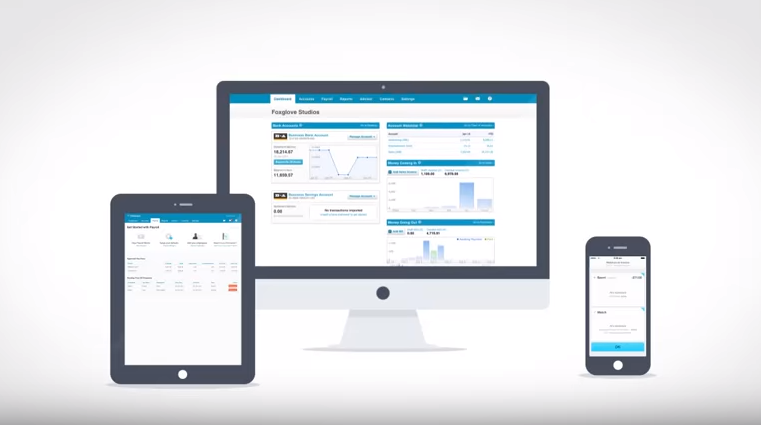
Bookkeeping Chef is an application that makes bookkeeping easier, meaning owners can concentrate doing other things and receive more clear financial reports.
You Should Start By Looking at the Weekly Numbers and Not Only Month-End
Restaurants don’t run on an annual basis. The managers this week plan their labor. Chefs order food today. Vendors change prices now.
That’s why Bookkeeping Chef provides weekly prime-cost flash reports alongside monthly financial statements.
Prime cost brings together costs of selling goods and labor two major areas that can move quickly in restaurants. The information provided by the Bookkeeping Chef reveals that prime costs usually represent 60 percent of sales in restaurants.
Imagine that sales barely grew, yet the prime cost rose. This percentage does not provide an answer. It gives the owner a reason to investigate.
Was there an increase in hours was worked? Was overtime a factor? Food costs changed? A vendor’s invoice was abnormally high. Have the sales mix changed?
It’s far more beneficial than discovering the same issue several weeks later.
Automate repetitive tasks
Bookkeeping for your own needs doesn’t have to mean manually transferring POS totals into spreadsheets, after service.
Modern bookkeeping automation for restaurants can handle a significant portion of the routine movement of financial data. The service can connect POS systems such as QuickBooks, QuickBooks, vendor platforms, recipe and inventory management, and Payment instruments/AP.
The goal is not automation to achieve its own ends.
The aim is to reduce manual data entry, and to ensure that financial records are kept up-to date so that owners are able to spend more time reviewing the information rather than assembling it.
It is a totally different bookkeeping model for restaurant establishments. Technology handles the mechanics and the owner stays engaged in the financial aspect.
Learn to ask the P&L More Questions
Stop taking your P&L as the accounting test.
Start with the sales. Next, look at the expenses necessary to achieve those sales. Compare the food and beverage efficiency. Study the cost of labor. Examine labor.
Compare periods.
If the sales increased, but the profit wasn’t, something else between those two lines changed. What did happen when prices for food increased? If the percentage of labor changed in the past, look at sales and staffing activity. If you notice a strange number, investigate rather than assuming that the restaurant had an awful month.
Bookkeeping Chef offers monthly P&Ls, which are finished in five days. Business owners can look over the financial performance of their business without waiting months before receiving financial statements.
For owners searching bookkeeping restaurant solutions, speed is useful but understanding is the bigger objective.
It’s not necessary to be a pro by doing it yourself
You can find a happy balance between hiring someone to take care of all your financial requirements and becoming your own accountant full-time.
Owners can continue to be involved in the process of accounting without needing to complete every task by hand.
It could be as simple as automatizing systems to ensure the flow of information, examining the monthly P&L and a weekly report on primary expenses and asking questions in the event that something unexpected occurs.
The specialization in restaurant bookkeeping can assist with this method by making sure the books are in order and assisting the proprietor to comprehend what they mean.
It does not mean the bookkeeper is able to perform all bookkeeping functions.
Business owners who can take a seat and converse intelligently about their company with the P&L will be more successful.
The aim of financial independence isn’t just to write more reports, but to achieve financial freedom
Restaurants already generate huge quantities of information. Another dashboard doesn’t have to be a necessity.
Real value is when an operator can open an P&L report, be aware that there was a change, and then go through the reports on prime costs.
Bookkeeping Chef’s strategy incorporates restaurant accounting automation, weekly reports, monthly P&Ls, and specific financial assistance for restaurants to make this feasible.
Automate repetitive tasks. Check your top costs each week. Learn the language used in your P&L.
There is no need to become an accountant.
You should become a restaurant owner who is aware of the financials of your restaurant.