
Processing one statement isn’t a huge challenge. If only one PDF file is needed it’s even a manual entry feasible.
Now, multiply that task across dozens of businesses, several bank accounts, as well as multiple statement intervals.
The issue has evolved. Once, it was a simple clerical task, but now it’s a lengthy process which consumes time of staff and can lead to unreliable data entry. It’s not only about speeding up the conversion of bank statements for accounting and bookkeeping companies. It’s about implementing a system that still works when volume increases.
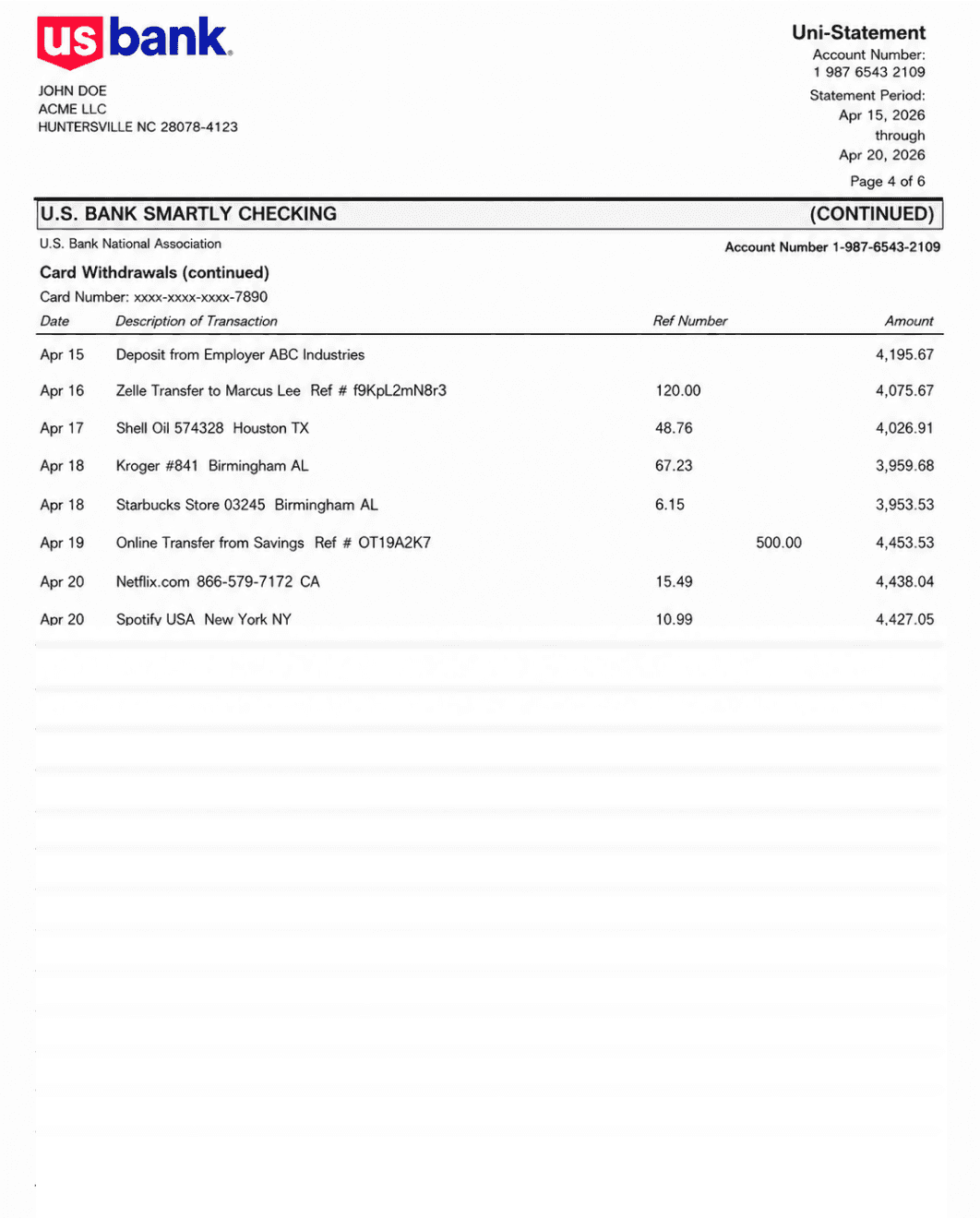
Image credit: docubrew.com
The bottleneck is repetition.
Consider an accounting firm receiving monthly PDFs of multiple clients. One client has Chase while the other uses Wells Fargo. Others send statements from Bank of America or Capital One.
The exact process repeats every time you open a PDF, and manually enter each transaction.
A bank statement converter could move the flow of work from transcription to reviewing. Docubrew can extract the figures of transactions directly from bank statements, instead of using estimates for financial values. The result is a structured file that can be scrutinized prior to being used. This difference is becoming more significant as the volume of documents increase.
Batch Processing Modifies Equation
The handling of files in a separate manner is appropriate for occasions when you need to convert. Accounting firms are faced with different challenges. Docubrew allows multiple statements to be loaded and processed in one single operation, with the results that are available separately. So, a company can process a set of client documents without building each transaction table.
If the accounting workflow requires CSV files users can transform the bank statements into CSV prior to moving forward.
Scanned paper statement can’t be excluded automatically. Docubrew provides OCR for scanned PDFs. This is useful for clients who have a mixture native PDFs and scans in their historical records.
Create Outputs for Accounting Work Ahead
The process of conversion isn’t over. The transactions generally need to go somewhere.
Docubrew is able to export CSV and Excel. QBO is an option for a team to transfer a bank statement to Quickbooks. It’s also available in a general spreadsheet format.
Firms that regularly convert bank statements to Quickbooks can build a more consistent process around receiving statements, processing them, checking the extracted data, and preparing the appropriate files for the accounting workflow.
Human review remains essential. Although automation can reduce repetitive transcriptions, bookkeepers still have to check financial data and finish the accounting tasks.
Client Data Deserves Its Own Workflow The Client Data Deserves Its Own Workflow
More documents means handling more sensitive client data.
Docubrew provides two methods of processing. Windows desktop applications perform conversions locally. The files can be saved to the computer. Cloud options use encrypted uploads, and Docubrew declares that converted and uploaded files are deleted immediately after 24 hours.
An accounting practice can choose the strategy that is most appropriate to its requirements for internal handling.
Scale the Process, not the Repetitive Work
As the practice of bookkeeping grows, more financial documents should be anticipated. This shouldn’t come as a result of automatically accepting more copy-and paste work.
The most important thing to consider is whether the method that worked for five clients would make sense for 50.
By standardizing how statements are processed, converted, reviewed and created using accounting software, businesses can build a workflow designed to handle recurring volumes instead of treating each PDF as an entirely new manual project.