
A deteriorating wastewater liftstation is situated in a municipality. The pumps are at the limit of their lifespan, the controls are outdated and the access hatch has worn out. However, the concrete wet well is robust and solid.
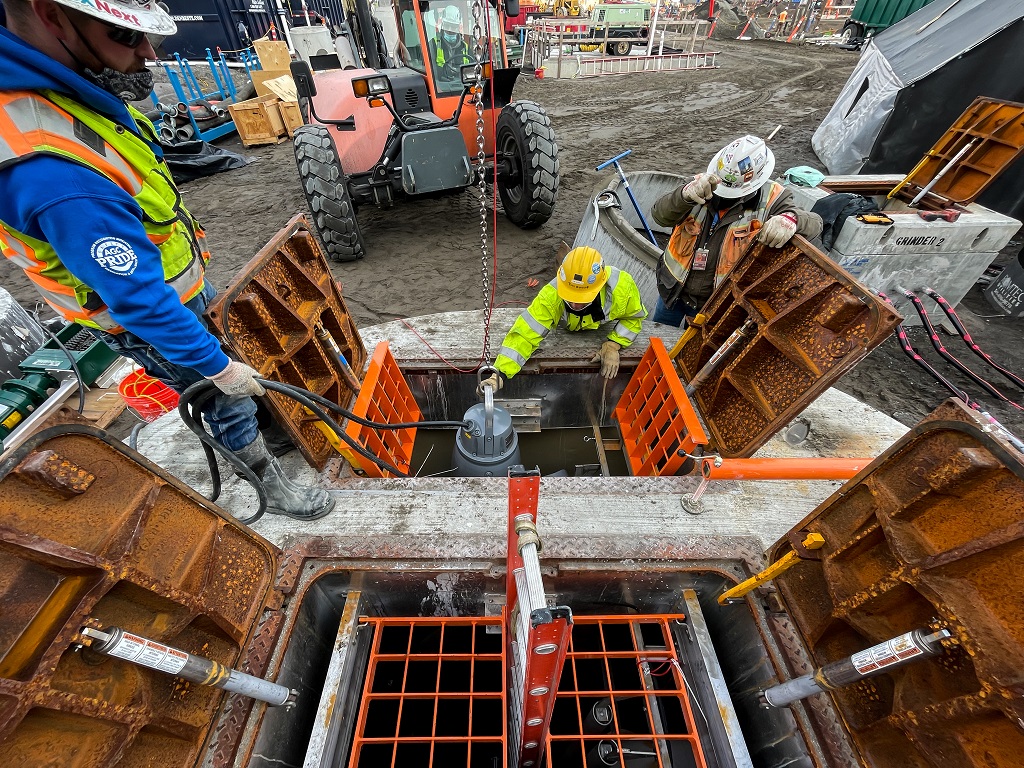
Image credit: romtecutilities.com
Do you think the station should be completely demolished and rebuilt? Not necessarily. It is important to ask if the infrastructure that is in place will be able to support an advanced system of pumping without compromising capacity in the future as well as reliability or access.
The retrofitting of pumps that are precisely designed can help save infrastructure and also replace components that are no longer meeting the operational standards.
Start with the structure isn’t being replaced by anyone.
The wet well is typically among the most expensive and disruptive parts to replace, as it’s submerged, connected to existing piping and is essential to the collection of wastewater.
Retaining a concrete structure that is functional can help in reducing the excavation and construction.
However, deterioration around the access hatch can make the choice. Romtec Utilities says that wet well hatches can be replaced as part of retrofits. Instead of attaching a brand new hatch to a damaged concrete structure or replacing the entire top slab might offer a more long-lasting solution. This approach can improve access and enhance the utility of the structure without having to rebuild the entire wet well.
A more powerful pump alters the Engineering
Let’s say a residential area has grown substantially since its first lift station was built. The current pumps might not be adequate for increased flows of wastewater.
A change to the pumping station may require higher horsepower pumps, but the choice of equipment cannot be made independently of the system in which it is located. To make the pumps more powerful, you may need modify the discharge elbows, or pipes. You might also have to change electrical controls and valves.
Engineers should also assess the system’s hydraulic requirements including the flow rate and the total dynamic head. Installing a larger pump without studying these factors can lead to problems with operation rather than addressing them. Making plans for future capacity in the initial design process can help later expansions to be much easier.
Keep the water moving during construction
A wastewater pump station retrofit introduces a challenge that ordinary equipment replacement projects may not face: the station may need to remain operational throughout construction.
Even when contractors are busy and preparing for the next project, wastewater is still arriving. According to the project it is possible that a temporary bypass pumping system might be required to ensure service is maintained as existing equipment is removed or new components installed.
Romtec Utilities addressed this type of issue at the Federal Law Enforcement Training Center in Brunswick, Georgia.
The project required replacing two older wastewater lift stations, while maintaining operation at this facility. The project was able accommodate the footprints of existing stations as well the operational needs by utilizing customized engineering on site and modular replacement systems. This is a good example of why it is important to look at the construction process prior to constructing.
When replacement becomes the better Alternative
Not every station is suited for rehabilitation. If the sewer lift station requires replacement due to a badly deteriorated well, structural issues or significant changes in hydraulic needs, it may be more appropriate to replace the station rather than modify.
Before making a decision it is essential to think about the structural integrity of the building, its compatibility equipment, accessibility to construction, service continuity and long-term requirements. Romtec Utilities starts retrofitting and replacing projects by identifying components that are to be kept and those that must be replaced.
The business will then design custom-designed engineering plans, budget estimates, and preliminaries of designs. Prefabricated parts are also helpful for organizing installation and reducing certain on-site demands.
The work isn’t over when the pumps begin to run.
The modern lift station must operate as a system. Prior to returning it back to regular service, startup testing and commissioning will help ensure that the controls, pumps, and associated equipment perform according to the approved design.
The manuals as well as the training of operators are equally essential. Maintenance personnel must be familiar with the latest equipment and operational procedures, as well as the documents before taking responsibility for the station.
Retrofitting infrastructure can preserve its value, while also addressing limitations that led to modernization.
For facilities owners and municipal authorities This means looking beyond the immediate repair. The most successful plan is one that integrates the new equipment with existing structures, maintains essential service throughout construction, and also prepares the pumping system to last for years to come of operation.